The middle of April has arrived. While fresh green leaves sprout and vitality returns to the land, there is a flower here that falls whole while still glowing red. These blossoms, scattered on the ground, serve as a solemn symbol of the Jeju April 3 Incident (Jeju 4.3). To the people of Jeju, the way the camellia falls at the peak of its bloom evokes the tragic loss of life that began 78 years ago.
Why did 4.3 Happen?
The Jeju 4.3 Incident began on March 1, 1947, when police fired upon a crowd during a liberation anniversary ceremony, killing six civilians. This sparked an armed conflict between the South Korean Labor Party’s local militants and government forces. At the time, Korea was divided along the 38th parallel, governed by the United States and the Soviet Union. As ideological tensions grew, the decision to hold a solo election in South Korea on May 10, 1948, intensified the conflict. The South Korean government, viewing Jeju as a "thorn in its side" due to widespread opposition, conducted indiscriminate massacres under the pretext of rooting out "Reds" (communists).
An Oral History: Until the Stones Speak
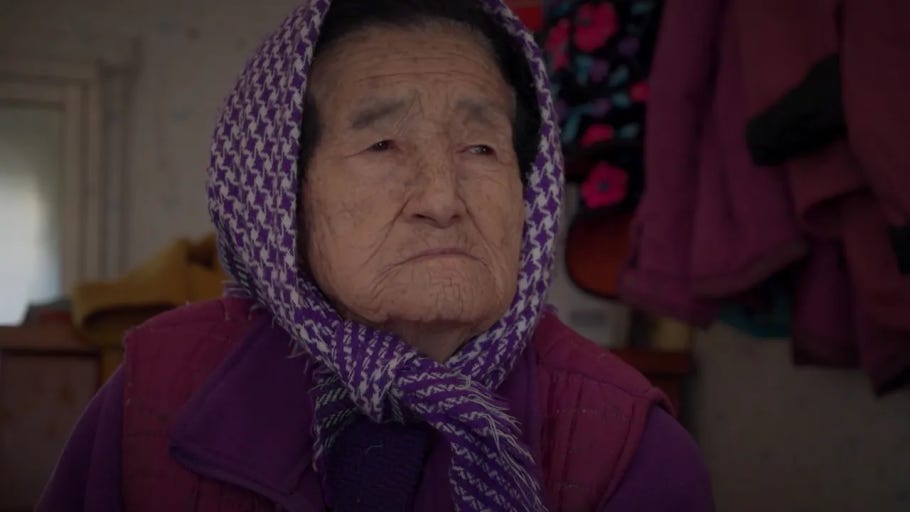
The documentary Until the Stones Speak reveals the deep scars of this tragedy through the voices of five grandmothers (Yang Nong-ok, Park Soon-seok, Park Chun-ok, Kim Myo-saeng, and Song Soon-hee) who were unjustly imprisoned. For decades, they remained silent, fearful of the heavy stigma attached to the word "Red."
— Grandma Kim Myo-saeng
The Hallan: Blossoming amidst harsh conditions
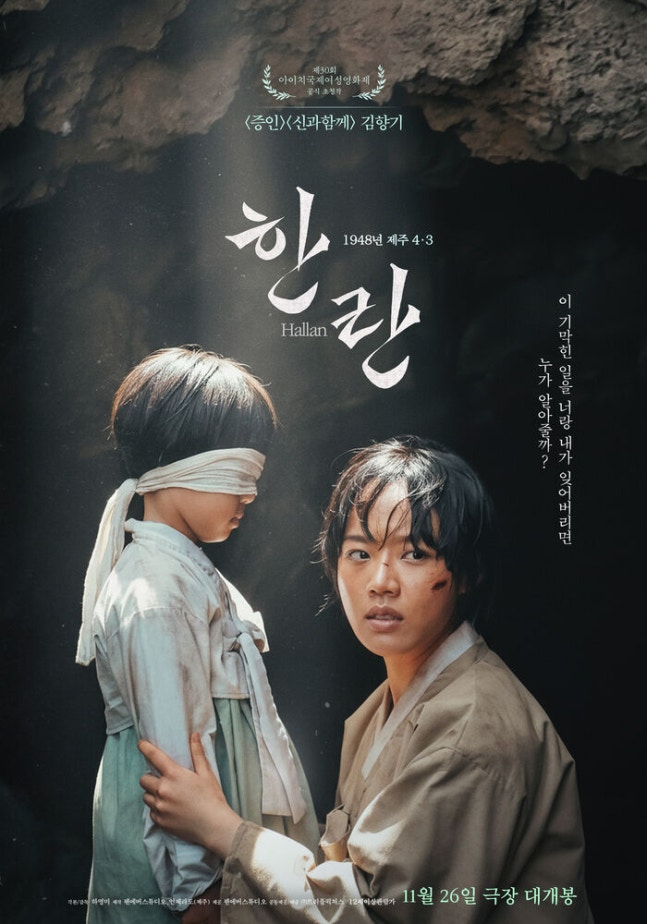
Hallan is an orchid that blooms in the dead of winter. Like its namesake, the film Hallan tells the story of Ajin, a mother struggling to protect her child during the massacre. Believing the soldiers would spare the elderly and children, she leaves her daughter, Haesaeng, with her mother-in-law and flees to Mt. Halla. However, after hearing that soldiers were killing everyone regardless of age, she rushes back down. The film honestly depicts the complex interests at play: soldiers blindly following authority, those torn between orders and conscience, and the tragedy of neighbors attacking one another.
Implications for "Our Future"
What drives our actions today? Are we blindly following authority while overlooking right and wrong? Are we attacking those on our own side? From the malicious comments overflowing on social media to outdated practices we follow without question, we must remain vigilant.
As students of Jeju, the history of 4.3 is not just a story of the past; it is a lesson for "Our Future." The future of our community depends on our courage to think critically and act with a conscience that refuses to discriminate. By remembering the fallen camellias and the resilient Hallan, we can ensure that our generation builds a future defined by peace, not prejudice.
Reader Responses
How do we carry the lessons of 4.3 into our future? Share your thoughts.